.png)
High-Intensity Training, Cortisol, and Testosterone in Men 30–50
- Justin English

- Feb 23
- 4 min read
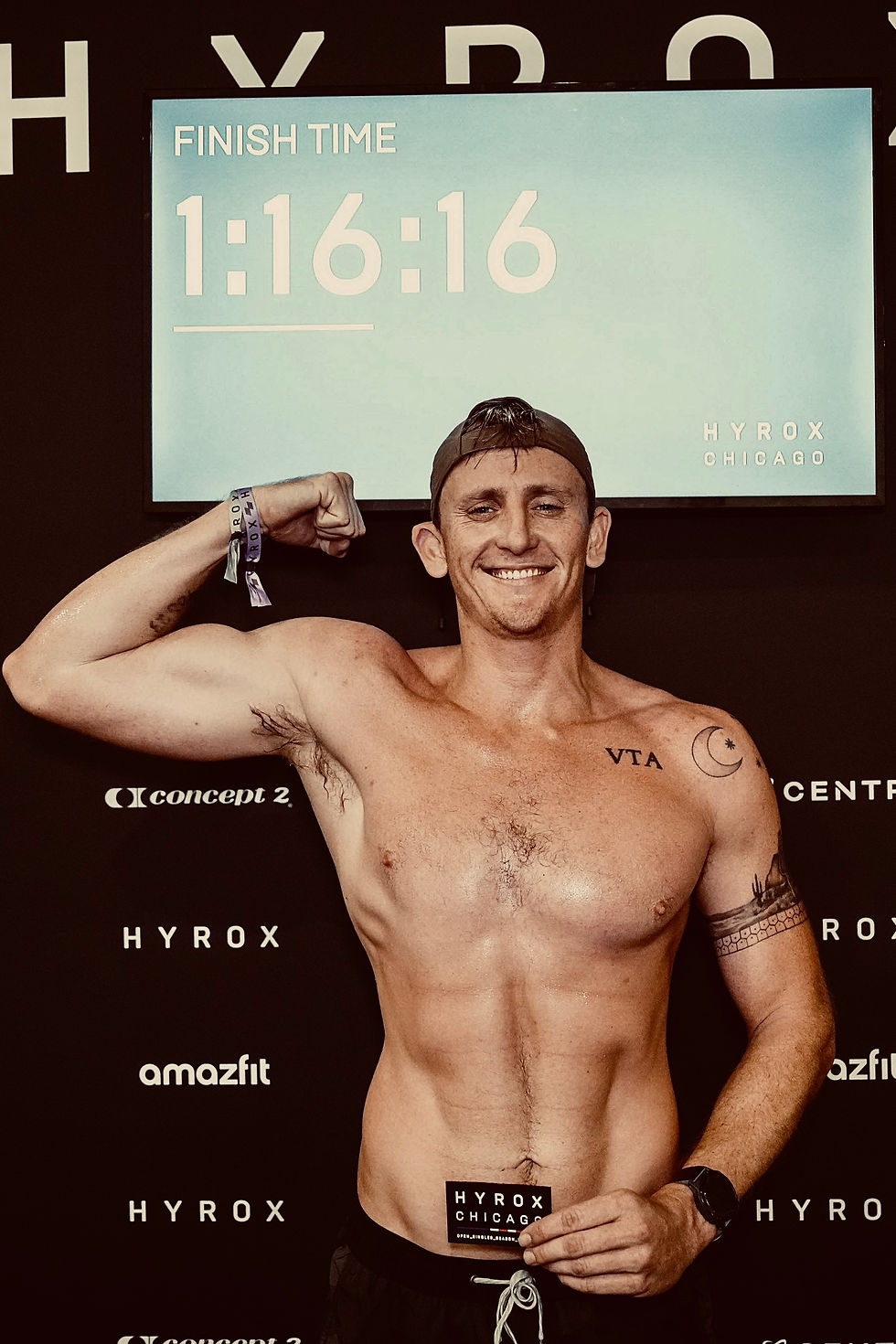
High-intensity training builds strength, power, and cardiovascular fitness. When programmed correctly, it improves insulin sensitivity, body composition, and performance.
The problem is not intensity.
The problem is chronic high intensity without structured recovery.
For men in their 30s, 40s, and 50s—especially fathers balancing career demands, family responsibilities, and limited sleep—frequent maximal training layered on top of daily stress can disrupt hormonal balance and recovery capacity.
This article explains how high-intensity training affects cortisol and testosterone, how long it takes for negative effects to emerge, and how structured periodization protects long-term performance.
Stress, Allostatic Load, and the Modern Dad
All training is stress. Adaptation occurs only when stress is followed by recovery.
High-intensity training (HIT)—including maximal lifting, sprint intervals, and aggressive metabolic circuits—activates the sympathetic nervous system and elevates cortisol and catecholamines.
Acutely, this is adaptive.
Chronically, it becomes problematic when combined with:
Occupational stress
Parenting demands
Sleep restriction
Financial or relational stress
The body does not differentiate between psychological stress and physical stress. Both contribute to allostatic load, the cumulative burden placed on the nervous and endocrine systems.
In my work with fathers and high-performing professionals at Unbroken Health and Fitness, I often meet motivated men who have been training hard and staying disciplined on their own—yet still find themselves feeling progressively more fatigued, flat, and hormonally drained before we recalibrate their programming.
The issue is rarely effort.
It is stress dosage.
How High-Intensity Training Affects Cortisol and Testosterone
Acute Hormonal Response (Hours to 24 Hours)
A single high-intensity session increases cortisol and may transiently elevate testosterone. These short-term shifts are normal and necessary for adaptation.
There is no harm in isolated hard sessions.
Functional Overreaching (2–3 Weeks)
When high-intensity sessions are performed 4–6 times per week for 2–3 consecutive weeks without deloading, early signs of functional overreaching may appear:
Elevated resting heart rate
Reduced heart rate variability
Increased perceived fatigue
Minor strength stagnation
Research shows that excessive intensity can begin altering the testosterone-to-cortisol ratio within this timeframe. This phase is reversible when volume or intensity is reduced.
Chronic Under-Recovery (4–8+ Weeks)
When maximal or near-maximal efforts are sustained 3–5 times per week for 4–8 weeks or longer, particularly with inadequate sleep (<7 hours nightly), more pronounced endocrine disruption can occur:
Persistently elevated cortisol
Reduced resting testosterone
Blunted anabolic signaling
Impaired sleep quality
Mood variability
Slower tissue repair
Most adult men do not develop full overtraining syndrome, which may require months of extreme overload. Instead, they exist in chronic under-recovery—subclinical but persistent hormonal drag lasting weeks to months.
At Unbroken Health and Fitness, intensity blocks are intentionally limited in duration to prevent this pattern.
Why Recovery Changes After 30
Recovery capacity is influenced by:
Sleep duration and quality
Baseline testosterone
Inflammatory status
Connective tissue resilience
Mitochondrial function
Systemic inflammation increases gradually with age. When high-intensity training is sustained across multiple mesocycles (8–12+ weeks) without structured variation, recovery kinetics slow.
This does not mean men over 30 should avoid intensity.
It means intensity must be concentrated, not constant.
Aerobic Training Protects Hormonal Balance
Moderate-intensity aerobic training (often called Zone 2 training) supports:
Mitochondrial density
Fat oxidation
Stroke volume
Autonomic balance
Recovery efficiency
Consistent aerobic work improves parasympathetic tone and reduces chronic sympathetic dominance. This enhances resilience to high-intensity exposure when it is strategically applied.
In practice, I program aerobic development as a foundation, not an afterthought. It improves recovery, not just endurance.
Submaximal Strength Builds Sustainable Power
Research shows significant strength and hypertrophy gains occur at 70–85% of 1RM when training is structured appropriately.
Submaximal loading:
Reduces central nervous system fatigue
Preserves joint integrity
Allows greater weekly consistency
Supports long-term progress
Many men increase strength after we reduce constant maximal lifting, simply because recovery improves.
Consistency drives adaptation.
Periodization: The Solution to Hormonal Burnout
Effective training for men 30–50 typically includes:
2–3 structured strength sessions per week
1–2 aerobic capacity sessions
1 strategic high-intensity exposure
A deload week every 4–6 weeks
High-intensity blocks limited to 2–3 weeks
This approach maintains exposure to intensity while protecting hormonal balance.
At Unbroken Health and Fitness, programming is built around physiological reality—not perpetual maximal effort.
Signs High-Intensity Training Is Overused
If the following persist for 2–4 consecutive weeks, stress is likely exceeding recovery capacity:
Difficulty falling or staying asleep
Elevated resting heart rate
Reduced libido
Afternoon energy crashes
Persistent soreness
Declining motivation
These are early warning signals—not character flaws.
Recalibrating intensity frequency often restores energy within weeks.
The Long-Term Objective: Strength Without Burnout
For fathers and high-performing professionals, the goal is not short-term exhaustion.
The goal is:
Stable energy
Healthy testosterone levels
Lean mass retention
Injury resilience
Decades of performance
Intensity is powerful.
But when sustained for months without variation, it becomes counterproductive.
Train hard when adaptation demands it.
Train intelligently the rest of the time.
Book a Free Consultation
If you are training consistently yet feeling flat, fatigued, or hormonally drained, your problem may not be discipline.
It may be stress dosage.
At Unbroken Health and Fitness, I design structured, periodized programs that align training intensity with recovery capacity and life demands.
If you want to build strength, protect testosterone, and stay energized for decades—not just months—book a free consultation today.
Let’s train in a way that supports your physiology, your family, and your future.


Comments